State Machines
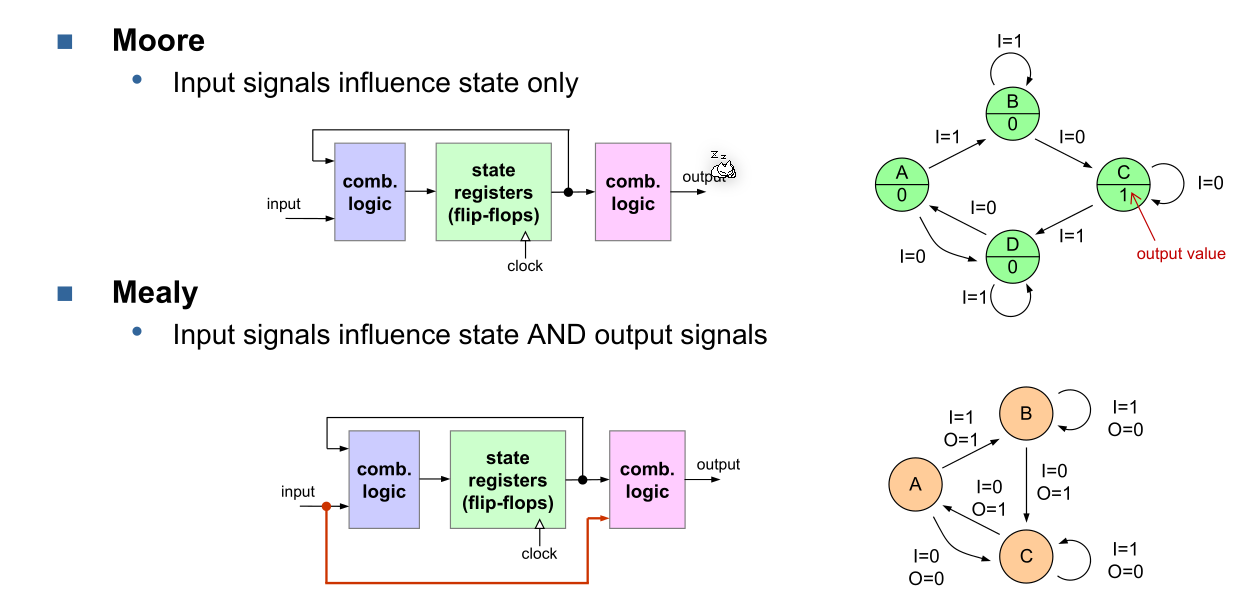
Finite state machines in hardware can run in parallel, since a large number of flip-flops can simultaneously change by a common clock signal. However, in software this parallelism doesn't exist.
To optimise, a software finite state machine should only change when something changed. To enable this, an event based system can work well.
Terminology
The internal states are the finite number of states the state machine can be in. An action is the effect a given state has on the outside world (e.g. enable the red light on a traffic line). Each event may or may not change the internal state (a transition) or/and trigger actions.
UML State Diagrams
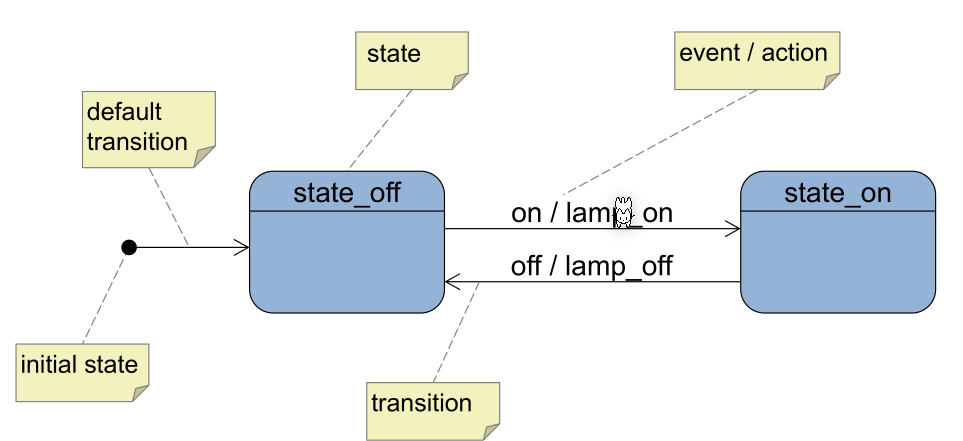
In the transition on / lamp_on, on is the event which happend and lamp_on is the action which will occurre. The transition /action doesn't have an event, like the initial transition.
For a state machine to be valid, the following rules are violated:
- Every state machine must have an initial state
- Each state has to be reachable through a transition (but not every state needs a transition away from it, e.g. an error state)
- The state diagram has to be deterministic
The following is an example of a state machine for a traffic light:
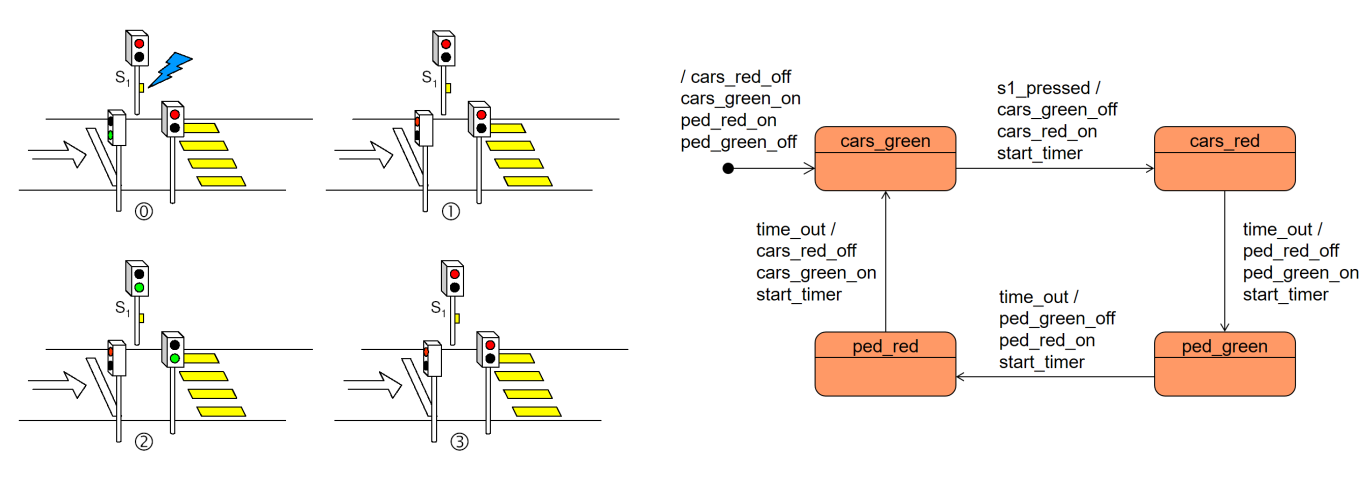
(Note: the transition between cars_green and cars_red starts a timer with start_timer. The next transition waits for this timer by listing the event to time_out)
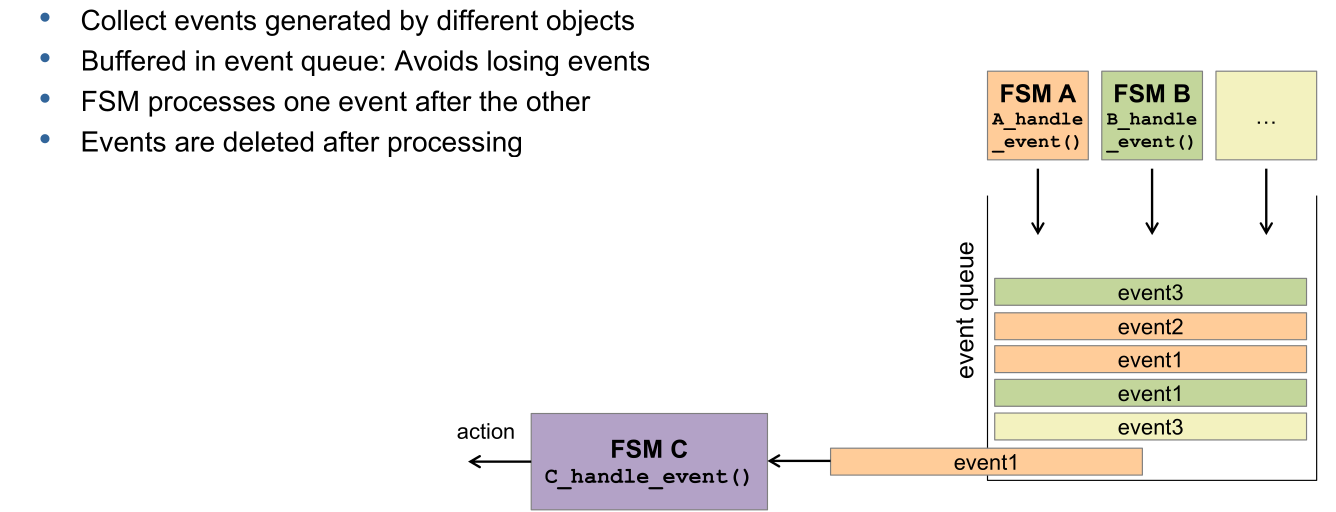
Event Queue
State Machine in C
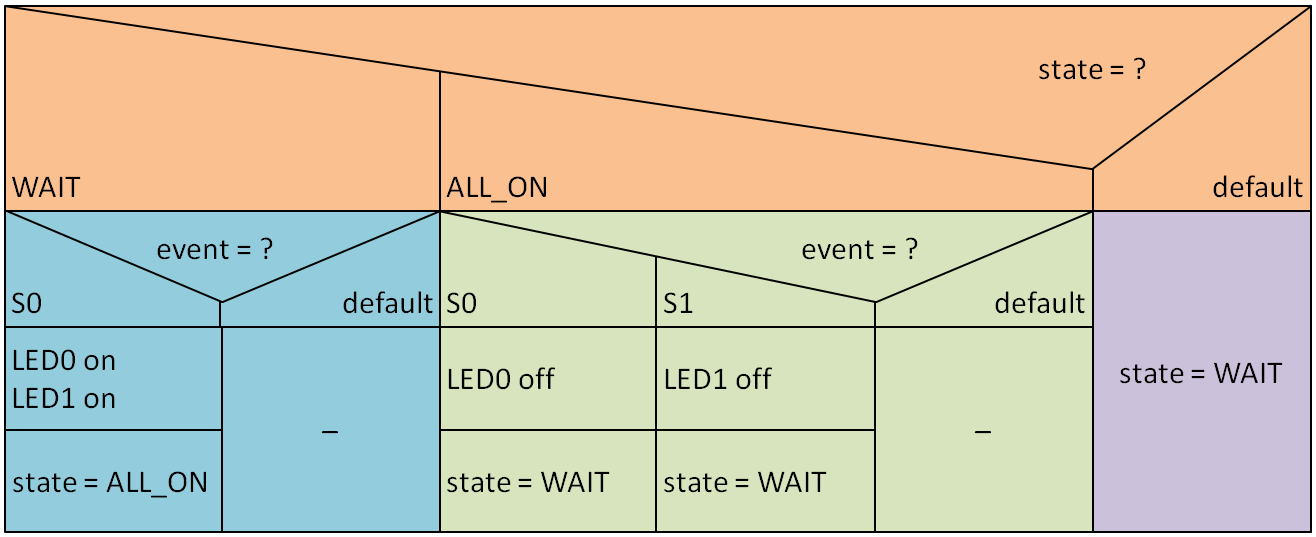
A state machine can be implemented with the following flow diagram:
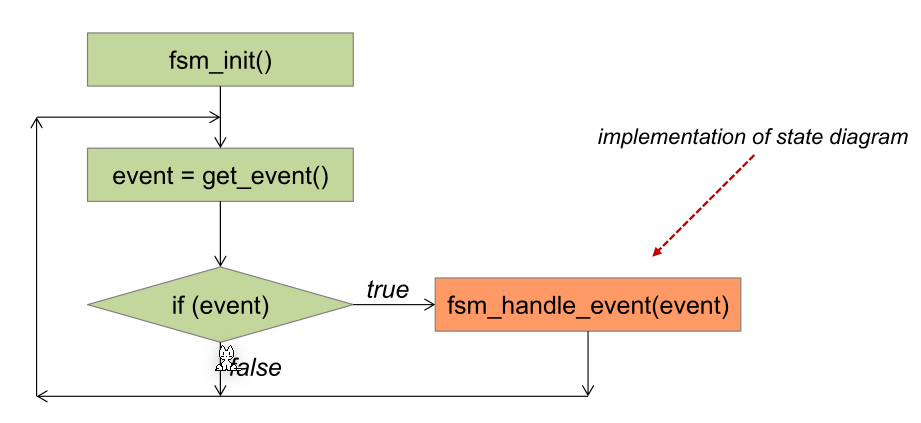
The following c code implements this:
int main(void) {
    event_t event;
    fsm_init();
    while (1) {
        event = get_event();
        if (event != NO_SWITCH) {
            fsm_handle_event(event);
        }
    }
}
fsm_handle_event(event) follows the following flow. Important: Do not forget BREAK in switch statements!!!!!